Becoming a first-time homeowner during an era of record-high home prices and punishing interest rates doesn’t leave much room in the budget for decor. But that’s okay! Now that we’re settled into a cozy home and have a moment to catch our breath, it’s been fun to savor the decorating and daydreaming process so that we can make the most of our floor plan and really put our stamp on the space.
Today, I’m sharing an inside look at my strategy for how to approach home decorating purchases with intention. I greatly admire all of the DIY queens and savvy FB Marketplace thrifters out there, but that is not quite my forte. If you’re unsure where to start when decorating your home or have champagne tastes on a beer budget and don’t know how to execute your vision, this “slow decorating” approach just might work for you too.
STEP 1: GATHER INSPIRATION
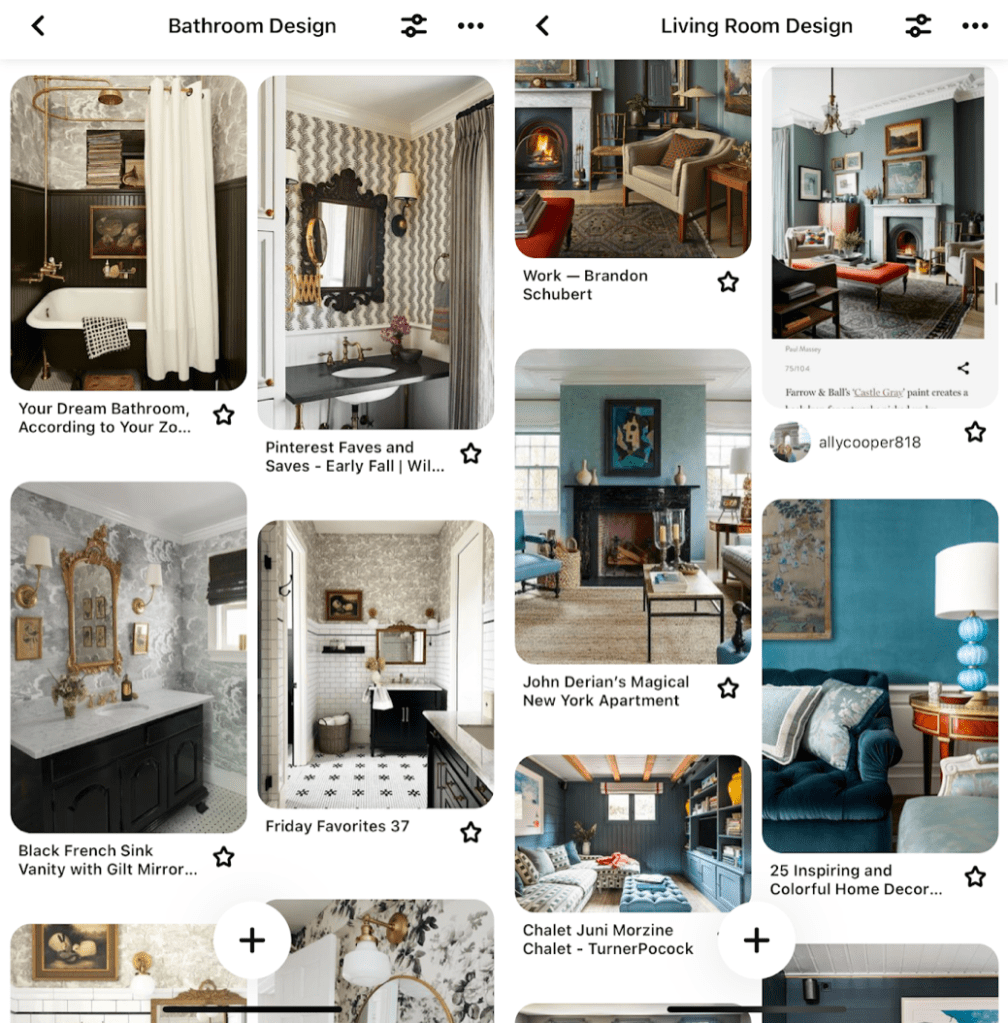
This is the fun part! Taking a deep dive into Pinterest and creating different Pinterest boards is my favorite way to gather inspiration, but I also take ideas from following interior designers and home renovators on Instagram, flipping through the occasional design book or magazine, and rewatching my favorite beautifully designed movies. This helps me look for patterns in what I’m drawn to so that I can really hone in on my personal taste.
STEP 2: TAKE INVENTORY OF NEEDS
Once I’ve had a chance to live in my space for a few months, I am able to take notice of which problems need to be solved. Is it too dark to read a book comfortably? Is the sofa not deep enough to sit comfortably? Would a different shape or size of furniture make better use of the space? Are our storage pieces working for us? Do we need an extra place for guests to sleep? I use this thought process to start making a wishlist of the types of products that might solve these function problems. For example, my ongoing function wish list has included a chaise sectional sofa between 120-130’’ with a deep seat (to make the most of our living room dimensions); an attractive guest bed to make double duty of the home office, and a ceiling fan for the bedroom to sleep more comfortably, to name a few.
STEP 3: START BUILDING A SPECIFIC WISHLIST
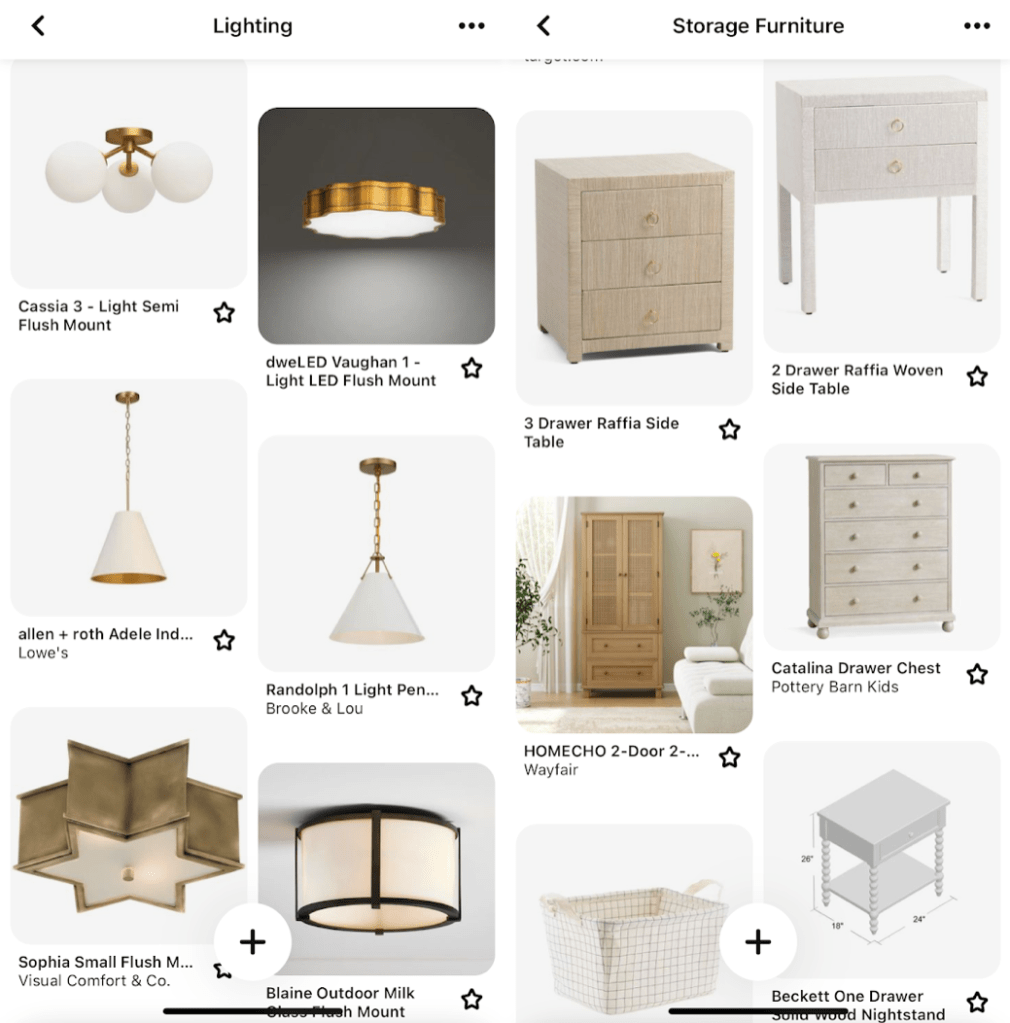
Now it’s time to go back to my inspiration images and see if I can identify a few products that might fill some of the gaps. If I’d like a new dining table, I’ll pin a few different options to my Pinterest board. Same goes for dining chairs or rugs or whatever else I’m shopping for.
I like to use a tool like Canva, Photoshop, Spoak, or even Powerpoint to mockup different room options and see how the different products work together visually. Which combinations do we like best? Even if it will take years to financially execute our vision, it’s important to have a roadmap of where we’re going, so that we don’t make purchases that end up being unnecessary or that clash with our long-term scheme. And I can’t forget to measure measure measure! I have learned not to make any assumptions about what will or will not fit in a space and always get out the tape measure to confirm.
STEP 4: PLOT OUT THE PURCHASES
Once I’ve identified some specific pieces that I’d like to save for and eventually purchase, I start by building a Google Sheet or Excel spreadsheet. Column A will list the items line by line detailing the make, model, and color and a hyperlink to the product page. Column B will list the going rate of that product, and column C will list the biggest markdown I’ve ever seen on that product and when, such as “20% off Black Friday.” I keep following this process for each of the products I’m eyeing for that room. When I’m ready to move onto the next room, I leave a blank row and then start a new section continuing down the sheet.
If you’re not sure if or when a particular product goes on sale, I recommend following that brand on social media and periodically checking the product page around major holidays and at the end of the season. Make note of your findings in column C.
Then, slowly but surely, I start making little purchases one by one, one month at a time, sticking to a very strict monthly spending budget. Rather than focusing on one room at a time to “finish” the room, I bounce around from room to room trying my best (but not always succeeding!) to prioritize items that solve a function problem (such as a ceiling fan or larger sofa or mattress for a future guest bed) over items that purely have a decorative purpose (like wallpaper or a light fixture), making sure to shape my spending around sales. If I know a big shopping holiday is coming up (like Black Friday) I’ll try to dial back my spending in the weeks or months prior, so that I have a little extra wiggle room to make the most of the sale.
For larger furniture purchases, I often have to wait until tax returns or the lucky few months that have an extra payday due to the serendipitous timing of a bi-weekly paycheck. I also sometimes create a budget item in my budget app and set aside a small amount of money per month until I’ve saved the full purchase price for that item. And once I have the money, if I know a sale is possible within the next year, I patiently watch and wait to purchase until then.
Buying secondhand via FB Marketplace is another smart strategy, but since I don’t have a FB page or a car larger than a compact sedan, my options feel limited and I don’t have as much experience with this approach. (If this is something you’re interested in, A Glass of Bovino is your gal.)
I plan to be in this home for a very long time, and living within my means is my number one house priority. So if it takes several years to bring my vision to life in a way that stays within my budget, so be it. Slow and steady wins the race here! Decorating slowly also allows house challenges to rise to the surface, making it easier and easier to prioritize the purchases that will make everyday life a little more comfortable and allow us to make the most of the space we have rather than getting caught up in the aesthetics.
What is your priority when decorating? Do you “finish” one room at a time, or do you bounce around between projects too?
 Bookworm Cottage Style
Leave a reply to Affordable 3-Drawer Dressers to Use as Nightstands – Bookworm Cottage Style Cancel reply